
Example of Strokes Gained Calculation: Step-by-Step Breakdown
Step-by-step example showing how strokes gained is calculated for each shot in a golf hole using PGA Tour benchmarks.
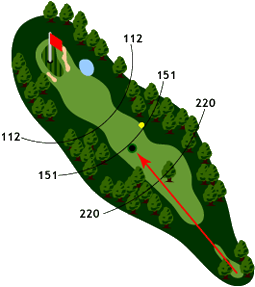
Understanding strokes gained becomes much easier when you see the actual calculation. Here’s a complete example of how strokes gained works for every shot in a single hole.
The Scenario: A 446-Yard Par 4
You’re playing a 446-yard par 4. The PGA Tour scoring average from this distance off the tee is 4.100 shots. This benchmark number represents how many shots a tour player typically needs to hole out from this position.
Every shot you hit changes your benchmark. The strokes gained formula compares where you started versus where you ended up, minus the one stroke you used.
Shot 1: The Tee Shot
You hit a great drive that lands in the fairway, 116 yards from the hole.
Starting benchmark: 4.100 shots (from 446 yards on the tee) Ending benchmark: 2.825 shots (from 116 yards in the fairway)
Strokes gained calculation: 4.100 - 2.825 - 1 = +0.275
You gained 0.275 strokes with that drive. Your tee shot advanced you more than the average tour player would expect, accounting for the shot used.
Shot 2: The Approach Shot
From 116 yards in the fairway, you hit your approach to 16 feet 11 inches on the green.
Starting benchmark: 2.825 shots (from 116 yards in the fairway) Ending benchmark: 1.826 shots (from 16’11” on the green)
Strokes gained calculation: 2.825 - 1.826 - 1 = -0.001
This shot was almost exactly average. You neither gained nor lost strokes, performing precisely at the tour benchmark for this distance and lie.
Shot 3: The Putt
From 16 feet 11 inches, you drain the putt for birdie.
Starting benchmark: 1.826 shots (from 16’11” on the green) Ending benchmark: 0 shots (ball in hole)
Strokes gained calculation: 1.826 - 0 - 1 = +0.826
Holing a putt from nearly 17 feet gains you 0.826 strokes. Tour players make this putt less than half the time on average.
The Complete Shot-by-Shot Breakdown
| Shot | Location | Distance | Benchmark | Strokes Gained |
|---|---|---|---|---|
| 1 | Tee | 446 yards | 4.100 | +0.275 |
| 2 | Fairway | 116 yards | 2.825 | -0.001 |
| 3 | Green | 16’11” | 1.826 | +0.826 |
| Total | +1.100 |
What This Hole Tells You
For this birdie, you gained 1.1 strokes against the field. Your driving contributed +0.275 and your putting added +0.826. The approach shot was neutral.
This breakdown reveals the source of your success. Without strokes gained, you might assume the birdie came equally from all three shots. The data shows your tee shot and putt did the heavy lifting while your approach was merely adequate.
Try Different Scenarios
Want to calculate strokes gained for different distances and lies? Our Strokes Gained Calculator lets you experiment with any combination:
- See how much a drive into the rough costs you
- Compare fairway shots from 100, 150, and 200 yards
- Understand the value of leaving yourself shorter putts
Apply This to Your Game
When you track rounds with golfity, every shot receives this same analysis automatically. Over time, you’ll see patterns emerge:
- Are you gaining strokes off the tee but losing them on approaches?
- Do you struggle more from the rough or from sand?
- How does your putting compare at different distances?
For more on putting-specific analysis, see putts gained by Mark Broadie. To understand how golfity displays this information for your rounds, check out strokes gained for individual shots.
The math behind strokes gained is straightforward. The insight it provides into your game is invaluable.