Golf Wearables: What They Actually Improve
A GPS watch can save you half a stroke on a single approach. A swing sensor can tell you your tempo is 3.1 to 1 and change nothing about your score. Here is what each type of golf wearable measures, what it is worth, and how to find out if yours is helping.
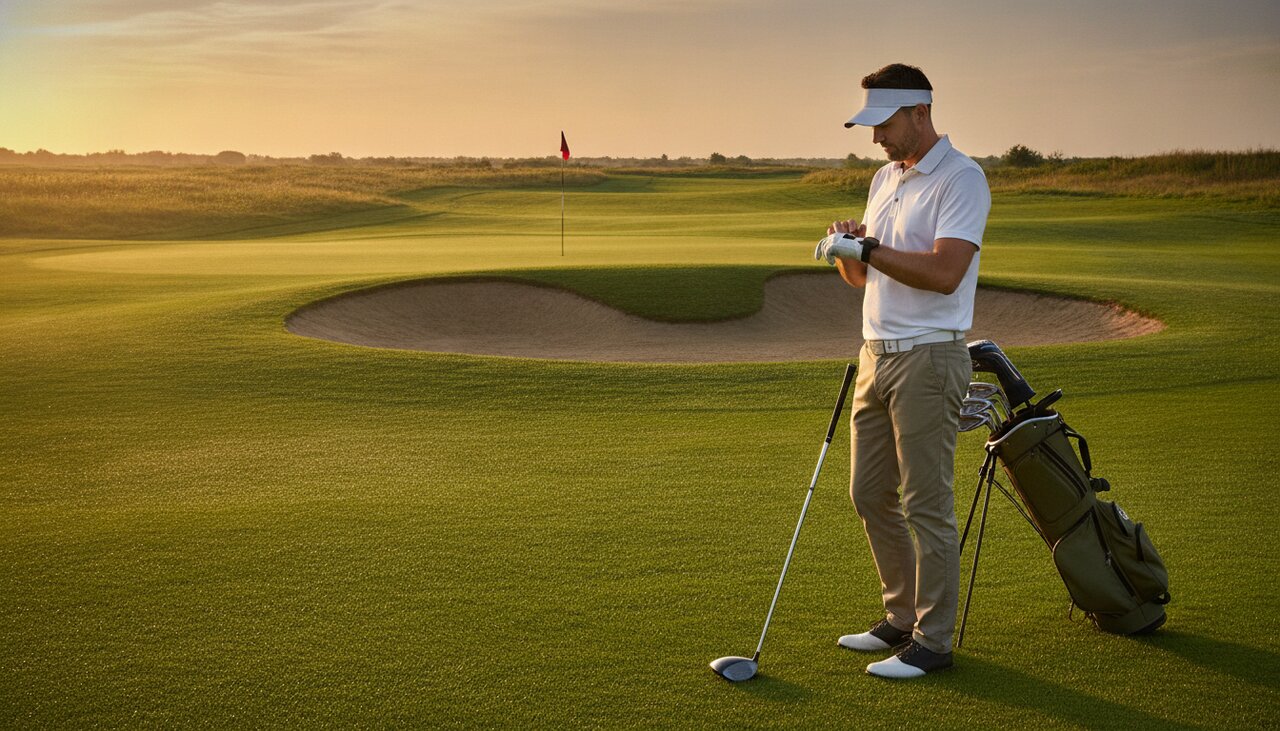
Golf wearables are sold on a simple promise: strap something on, collect data, play better. The first two parts are easy. The third depends entirely on what the device measures and whether that measurement leads to a different decision on the course. A smart watch that tells you the exact yardage to the back of the green changes which club you hit. A wrist sensor that grades your backswing usually doesn’t.
This review sorts golf accessories by the one question that matters for your handicap: which part of your scorecard does it touch?
The Four Types of Golf Wearables
Most products on the market fall into one of four groups. Some devices combine two, but the data they produce still sorts cleanly.
| Type | What it measures | Where it can help your score |
|---|---|---|
| GPS smart watch | Distance to front, middle, back, hazards | Club selection, avoiding penalty areas |
| Shot tracking tags or sensors | Which club you hit, from where | Automatic stat logging (with corrections) |
| Swing and motion sensors | Tempo, wrist angles, club speed | Practice sessions, not the round itself |
| Fitness and recovery bands | Heart rate, steps, sleep | Indirectly, through energy and focus |
The further down that table you go, the weaker the link between the data and your score. That doesn’t make the bottom rows useless. It means you should expect less from them.
GPS Smart Watches: The Golf Wearable That Pays for Itself
A GPS watch does one job: it tells you how far you are from things. That sounds basic, and it is, but distance is where a lot of amateur strokes leak away.
Picture a 150-yard approach to a green that is 30 yards deep. You guess 150 to the middle, but the pin is at the back and the real number to the flag is 162. You hit your 150 club, land on the front, and face a long two-putt from 40 feet. Or the opposite happens: the pin is front, you fly it to the back fringe, and you’re chipping downhill. For a mid-handicapper, the gap between a 20-foot putt and a tricky chip is often half a stroke or more, according to the amateur baselines built from Mark Broadie’s research.
Watches also help off the tee. Knowing that the fairway bunker is 238 to carry, or that the creek crosses at 255, turns a hopeful driver into a deliberate 3 wood. Penalty strokes are among the most expensive mistakes in amateur golf, and many of them start with a guess about distance.
What a GPS watch won’t do is tell you whether those decisions worked. It shows you numbers during the round and forgets them after. If you want to know whether your approach play improved, you need a record of the shots, not just the yardages. We cover the difference in detail in GPS app vs stats app.
Verdict: worth it for most golfers who play without a caddie or yardage book. The benefit shows up in approach and penalty numbers.
Shot Tracking Tags and Sensors
These are small devices that screw into the end of each grip or clip onto the club. When you hit a shot, the sensor (or your watch, tapping a tag) records which club you used and where you stood. Arccos, Shot Scope and Golf Pad TAGS are the best-known systems.
The appeal is automation. You play, the system logs, and you get stats afterward without typing anything. The catch is accuracy around the green. Sensors struggle with putts, chips from a few feet off the fringe, practice swings and the occasional provisional ball. Most users spend a few minutes after each round fixing missed or phantom shots. Hardware costs also add up: Arccos sensors run $249.99 with a $199 yearly membership after the first year.
The other limitation is lie. A sensor knows where you were, but GPS can’t reliably tell a fairway lie from a first-cut lie or a fried egg in the bunker. Lie matters a lot for strokes gained, because a shot from 140 yards in the rough has a very different expected score than the same distance from the fairway.
Our Arccos vs Shot Scope vs golfity comparison goes through pricing and accuracy for each system.
Verdict: useful if you hate entering data and will keep up with corrections. Not required for good stats.
Swing and Motion Sensors
Wrist-mounted and glove-mounted sensors measure what your body does during the swing: tempo ratio, wrist hinge at the top, clubface rotation, sometimes estimated club speed. A typical reading looks like “backswing 0.92 seconds, downswing 0.29 seconds, tempo 3.1:1.”
That’s interesting on the range. It can help you groove a change your coach gave you, or spot that your tempo gets quick when you’re tired. On the course, it doesn’t help much. Few golfers can act on a wrist angle reading between shots, and trying to usually makes things worse.
The honest test: after a month of using one, can you name a stat on your scorecard that moved? Most people can’t, because the sensor measures inputs and your scorecard measures outcomes. Somebody still has to connect the two.
Verdict: a practice tool. Buy it for range sessions, leave it in the bag for rounds.
Fitness and Recovery Wearables
Heart rate monitors, fitness bands and the health side of most smart watches track things like steps, heart rate during the round and sleep the night before. Walking 18 holes is a decent workout, and seeing it counted is satisfying.
The golf link is indirect but real. If your heart rate spikes on the first tee or over a must-make putt, that’s useful to know when you work on routines. If you consistently play the back nine worse than the front, fatigue, hydration or blood sugar may be part of the story. A fitness band can hint at that. Your scoring data can confirm it: split your strokes gained by front nine and back nine across ten rounds and see whether the drop is real.
Verdict: good for general health and pressure awareness. Pair it with round data before drawing conclusions.
Are Golf Wearables Worth It? A Simple Rule
Spend on the device that changes a decision, and get your performance data from somewhere that records outcomes.
For most amateurs that means a GPS watch on the wrist for yardages and a stats app for the record of what each shot did. Swing sensors and fitness bands are extras. Buy them if you enjoy that kind of practice, not because you expect them to fix your scores.
golfity covers the record. You log each shot’s distance and lie on your phone, and golfity calculates strokes gained against a benchmark that matches your level, with no sensors or tags required. There’s no watch app, so the watch handles yardages and the phone handles the record. Many golfers enter shots after each hole while walking to the next tee.
How to Test Whether a Wearable Helps
Don’t trust the feeling of a good round. Run a small test instead: play 8 to 10 rounds before you start using the device and note your strokes gained by category, then play another 8 to 10 with it, on the same courses where you can.
Then look only at the category the device should affect. A GPS watch should move approach and penalty strokes. A swing sensor that works should eventually show up off the tee or on approach. A fitness band might narrow the gap between your front nine and back nine.
If the category the device targets moved by 0.3 strokes per round or more, it’s earning its place. If nothing moved after ten rounds, the data was interesting but it didn’t change how you play. That’s fine for a gadget you enjoy. It’s not fine for one you bought to lower your handicap.
The same before-and-after approach works for any equipment change. Our guide to fitting your golf ball with data uses it to test a ball switch.