What Does a 40 Handicap Shoot? Beginner Scores
A 40 handicap shoots 112 on a good day and roughly 115 to 118 on a normal one. Here is what the published data says about golfers from 36 to 54, what it leaves out, and how a 40 compares to scratch through 30.
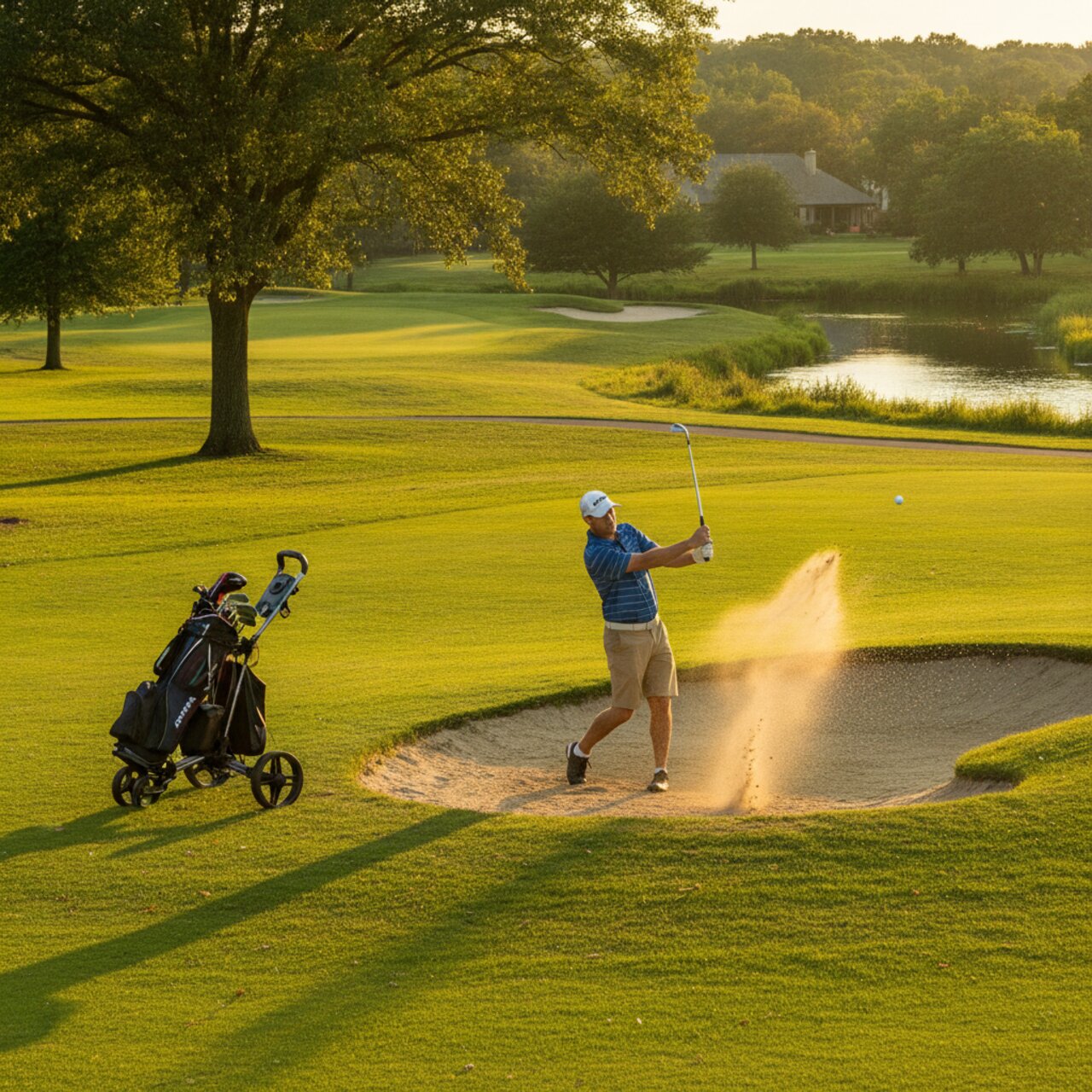
A 40 handicap shoots about 112 on a good day at a par-72 course, and roughly 115 to 118 on a typical one. The 112 is just par plus 40. Your Handicap Index comes from your best 8 of your last 20 rounds, so it describes your better days, and the normal round sits a few strokes higher.
That makes the short answer to “what does a 40 handicap shoot” about 116. The catch is that almost nobody publishes measured stats for golfers above 30, so this page has more gaps than any other in the series. Below is what the data does cover for the 36 to 54 range, where we’ve filled gaps with projections and labeled them, and where no number exists.
40 handicap average score compared to other handicaps
| Handicap | Typical score | Greens in regulation | Putts per round | Penalty strokes | Strokes gained vs PGA Tour |
|---|---|---|---|---|---|
| Scratch (0) | 74–76 | 62% | 30.5 | 0.56 | -3.2 |
| 5 | 79–81 | 46% | 31.5 | 0.91 | -6.2 |
| 10 | 84–87 | 35% | 32.5 | 1.62 | -9.2 |
| 15 | 90–92 | 23% | 33.5 | 2.45 | -12.2 |
| 20 | 95–98 | 16% | 34.5 | 3.03 | -15.2 |
| 25 | 100–103 | 9% | 35.5 | 4.67 | -18.4 |
| 30 | 105–108 | n/a | n/a | n/a | -21.5 |
| 40 | 115–118* | n/a | n/a | n/a | n/a |
*Projected, not measured. See below.
Scores for scratch through 30 come from our average score by handicap table, putts from our putting average benchmarks, and strokes gained from the Broadie-based benchmarks for every handicap. Greens in regulation are Shot Scope’s published amateur figures, and penalties come from Shot Scope’s Traditional Statistics v Strokes Gained e-book. Every one of those sources stops at 25 or 30.
Where the 115–118 comes from
From 20 handicap up, every row in our scoring table sits 3 to 6 strokes above par plus the handicap: 95–98 for a 20 (par plus 20 is 92), 100–103 for a 25, 105–108 for a 30. Apply the same gap to a 40 and you get 115 to 118. That’s a projection from the pattern, not a measured average. The gap has widened as handicaps climb, from 2 to 4 strokes at scratch to 3 to 6 at 20 and above, so a 40’s real typical round could land a stroke or two higher than 118.
What a 36 to 54 handicap shoots
The World Handicap System lets an index go as high as 54.0, so a 40 sits in the middle of the beginner range, not at the bottom of it. Using the same arithmetic:
| Handicap Index | Par plus index (a good day) | Typical round, projected | Most you can post on one hole |
|---|---|---|---|
| 36 | 108 | 111–114 | par + 4 on every hole |
| 40 | 112 | 115–118 | par + 5 on 4 holes, par + 4 on 14 |
| 45 | 117 | 120–123 | par + 5 on 9 holes, par + 4 on 9 |
| 54 | 126 | 129–132 | par + 5 on every hole |
The last column is a rule, not an estimate. For handicap purposes, the most you can count on any hole is net double bogey: par, plus 2, plus the strokes you receive there. A course handicap of 40 gets 2 strokes on every hole and a third on the four hardest, so a par 4 caps at 8, or 9 on those four holes. Before you have an index at all, the cap is par plus 5, as covered in building a handicap baseline as a new golfer.
All of this assumes a par-72 course with a slope of 113. On a harder course your course handicap goes up: a 40 index on a 130-slope course with a 72.0 rating plays off 46.
Who plays off a 40 handicap
Fewer golfers than you might think, at least among those who keep an index. England Golf’s December 2025 figures, reported by National Club Golfer and covering more than 780,000 golfers, put 2.7% of all players between 36 and 40 and 2.2% at 41 or higher.
The split by gender is wide:
- Men: 1.5% between 36 and 40, and 1% at 41 or more.
- Women: 11.6% between 36 and 40, and 11.4% at 41 or more. Nearly one woman in four with an index plays off 36 or higher.
The USGA doesn’t publish a 36+ band for the US. Its 2025 data puts the average index at 14.0 for men and 28.8 for women, per GOLF.com. Our good golf handicap breakdown has the full percentile table.
Many beginners who shoot 115 never post a score, so these shares almost certainly undercount golfers at this level.
The full stat profile of a 40 handicapper
Scoring
- Typical score: 115–118 projected, 112 on a good day.
- Per hole: 115–118 on a par 72 is about 6.4 to 6.6 strokes per hole, roughly two and a half over par on an average hole.
- Doubles or worse: no published figure. Shot Scope’s highest band is a 25 at 9.18 doubles or worse per round, from our birdies and double bogeys by handicap table. A golfer averaging two and a half over per hole makes more than that.
Off the tee
- Fairways hit: no figure above 28. Golfshake’s 25–28 band hits 7.1 fairways per round, and that group is 12 or more shots better than a 40.
- Driving distance: no published figure.
- Strokes gained off the tee: not published above 30, where it’s -5.0. A 40 loses more.
Approach
- Greens in regulation: no figure at 40. Golfshake’s 25–28 band hits 2.6 greens per round and Shot Scope’s 25 hits 9%, or 1.6.
- Strokes gained approach: -10.5 at 30, the last published row. Approach is about half the total loss at every level in the table, and there’s no reason to expect a 40 to be different.
Around the green
- Scrambling: no figure at 40. Shot Scope puts a 25 at 25% up and down from inside 50 yards, per our scrambling percentage by handicap table.
- Strokes gained around the green: -3.5 at 30. Not published higher.
Putting
- Putts: no figure at 40. Golfshake’s 500,000-round analysis tops out with a 21–28 band at 36 putts per round.
- Strokes gained putting: -2.5 at 30. As at every other level, putting is the smallest share of the gap.
Penalties
This is the one stat with a published number near 40. In a 2020 analysis of rounds posted to TheGrint, a 36 handicap took about 6 penalty strokes a round, against about 2 for a scratch golfer. Shot Scope’s figures run lower (4.67 for a 25, per our penalty strokes by handicap table), and the two datasets measure differently, so read 6 as a rough level for a 36. Nobody we’ve found publishes a number for a 40.
What separates a 40 handicap from a 30
Line up what exists:
- Score: about 10 strokes (115–118 projected, against 105–108).
- Total strokes gained: a 30 loses 21.5 to a tour player. There’s no published row for a 40, and we won’t extend Broadie’s table past what the research covers.
- Per hole: roughly half a stroke more on every hole.
- Penalties: a 36 already averages about 6 in TheGrint’s data, more than any measured figure for a 25.
For the next levels up, see what a 30 handicap shoots, what a 25 handicap shoots and what a 20 handicap shoots. To see what a single shot is worth from a given distance and lie, try the strokes gained calculator.
How your numbers compare to a 40 handicap
Above 30 the published benchmarks run out, so your own rounds are the most accurate benchmark available. Two golfers who both average 116 can lose their strokes in very different places: one to penalties and lost balls off the tee, the other to three and four chips around every green. Only their stats show which one they are.
Log 3 rounds and golfity shows your numbers against your handicap.