
How Wind Affects Your Strokes Gained
A 25 mph day can wipe two strokes off your round before you make a single bad swing. Wind does not get subtracted from your strokes gained, so it pays to know exactly where it takes the strokes from.
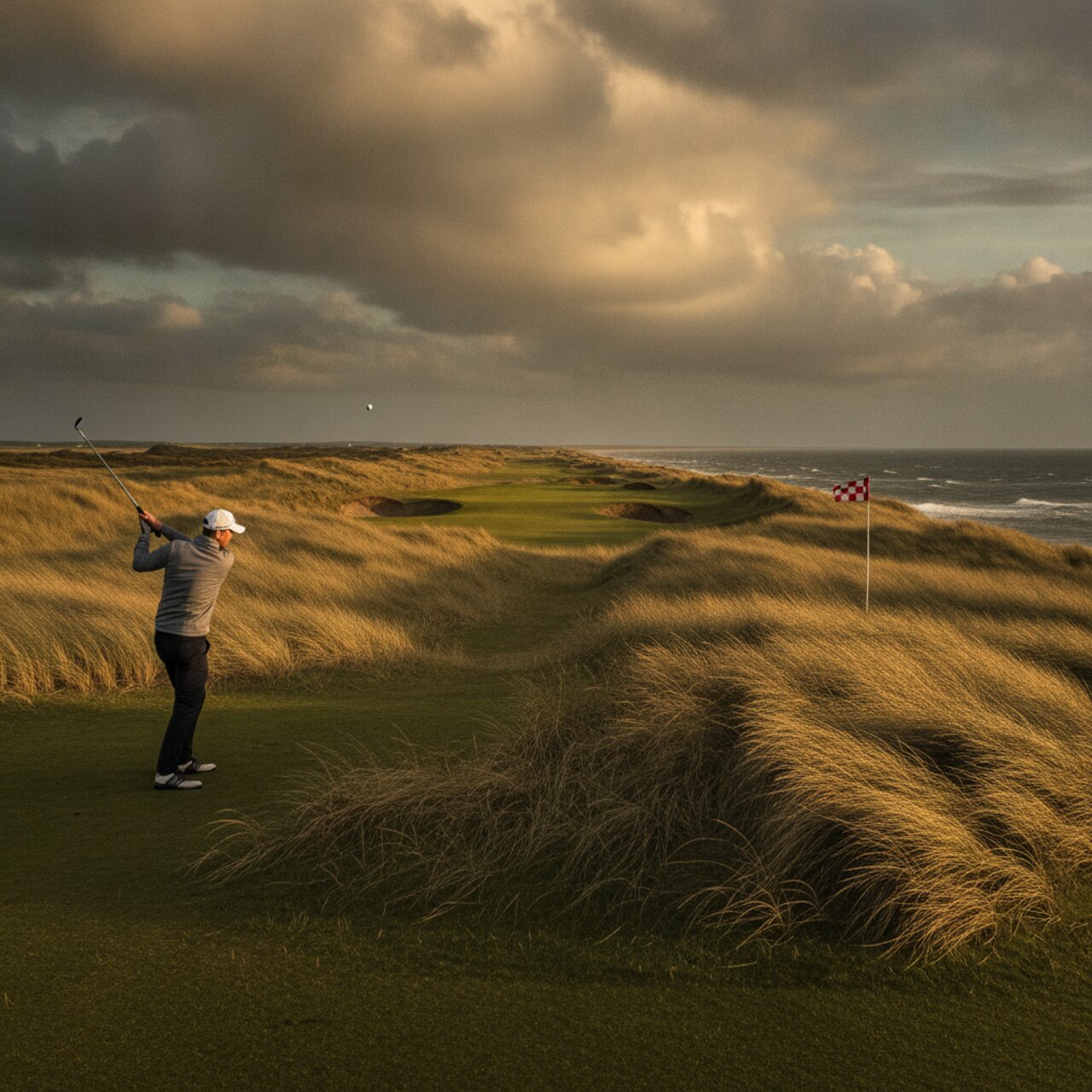
You play a solid round in a 25 mph wind, shoot 88 instead of your usual 84, and open your stats expecting some credit for the conditions. There is none. Your strokes gained is down almost a full stroke per nine and the app is telling you your approach play fell apart.
It did not fall apart. Wind moved every shot further from the hole than your swing deserved, and strokes gained measured the result rather than the intention. Understanding where those strokes went is more useful than shrugging and blaming the weather, because wind does not take strokes evenly across your game.
Why strokes gained does not forgive the wind
Strokes gained works by comparing every shot you hit to a benchmark: the average number of strokes a reference golfer needs to hole out from that spot. Mark Broadie built those baselines in Every Shot Counts from hundreds of thousands of shots, and the benchmark tables in golfity work the same way. A 150-yard approach from the fairway has one expected value, whatever the flag is doing.
That fixed baseline is the whole point of the stat, and it is also why windy rounds look bad. There is no weather adjustment. A shot that finishes 45 feet away is scored as a 45-foot shot whether the wind pushed it there or you flared it. Tour players get the same treatment, which is why scoring averages at exposed links venues climb by two to three strokes when the wind gets up.
Which means a single windy round tells you almost nothing about your game. You need enough rounds for the weather to average out, and that is usually 10 to 20 of them before your numbers are worth reading.
What wind does to your effective distance
The usable rule of thumb for an iron is roughly one percent of carry per mph of headwind, and about half that benefit downwind. Here is a stock 150-yard shot in different conditions:
| Wind | Plays like | Club adjustment |
|---|---|---|
| Calm | 150 yd | Stock 7-iron |
| 10 mph into | 163 yd | One more club |
| 20 mph into | 178 yd | Two more clubs |
| 10 mph down | 144 yd | Half club less |
| 20 mph down | 138 yd | One club less |
| 15 mph across | 150 yd, 12 yd of drift | Same club, wider aim |
Look at the asymmetry. Twenty into the wind adds 28 yards; twenty behind you takes off only 12. A headwind steepens the descent and gives drag more time to work, while a tailwind reduces the relative airspeed that was generating lift in the first place. Out and back on a windy day, the holes into the breeze cost you more than the holes downwind give back.
Spin makes it worse. A high, spinny 7-iron loses far more into the wind than a flighted one, which is why the same 20 mph headwind might play as two clubs for one golfer and three for another. Your own numbers matter here more than any table, and if you already know your reliable distance rather than your best-swing distance, you are ahead.
Where the strokes actually go
Wind hits the four strokes gained categories very unequally.
| Category | Wind exposure | Typical loss in 20 mph |
|---|---|---|
| Approach | Highest | 0.7 to 1.5 strokes per round |
| Off the tee | High | 0.4 to 0.8 strokes per round |
| Around the green | Moderate | 0.2 to 0.5 strokes per round |
| Putting | Low | Near zero below 25 mph |
Approach play absorbs the damage because proximity is the currency. Take that 150-yard shot into a 20 mph wind: it now plays 178, and the expected strokes from 178 versus 150 is about 3.08 against 2.98 for a tour-level benchmark. That 0.1 is the honest cost of the distance. The rest of the loss comes from the miss. A shot you would normally leave 28 feet away finishes 45 feet away, and that alone is worth roughly 0.15 strokes gained. Do that on ten approaches and you have handed back a stroke and a half without hitting anything you would call bad.
Off the tee, crosswind is the culprit more than headwind. Losing 15 yards of carry into the breeze barely moves your expected score. Drifting 20 yards further right than usual into the rough or the trees moves it a lot, because dispersion is what strokes gained off the tee is really measuring.
Around the green, wind matters indirectly. Windy days are usually dry days, greens run faster, and the chip you normally land softly now releases eight feet past. Putting is the one category that stays honest. Below about 25 mph the ball is not moving on the green, and while a hard crosswind on a long putt and the difficulty of standing still are real, they show up as noise rather than a systematic loss.
Playing the wind without bleeding strokes
- Club up more than feels right. Most amateurs underclub into the wind because they club for the shot they hope to hit. Take the extra club and swing at 80 percent, which lowers spin and holds the flight.
- Take the flag out of play sooner. Wind widens your miss pattern, so the margin you need around a tucked pin grows with the wind speed. This is the day the center of the green earns the most.
- Aim for the drift, do not fight it. Trying to hold a ball against a 15 mph crosswind is a low-percentage shot for most players. Start it into the wind and let it come back.
- Downwind is a scoring chance, not a distance contest. Fewer yards of gain than you expect, and a ball that lands hot and runs through greens. Land it short and let it release.
- Reset your expectations for the card. In a strong wind, bogey golf is a good round for a 15-handicap. Chasing your normal score is how a windy day becomes a double-bogey day.
Reading windy rounds in your own data
The fix in your stats is separation, not excuses. In golfity, open the round summary from a windy day and look at approach proximity by distance rather than the total. If your proximity from 150 to 175 yards is 15 feet worse than your average but your putting and short game look normal, you have found the wind, and there is nothing in that round to correct.
Run a few of your rounds through the strokes gained calculator and compare a calm round with a windy one shot by shot. The pattern is consistent: distance control gets worse, dispersion widens, putting holds steady. If a windy round instead shows your putting collapsing and your driving fine, the wind was not your problem that day.
Track enough rounds and the weather stops mattering to your averages. What is left is the part of your game you can actually fix, which is exactly the point of measuring in the first place. If a single ugly round still has you rattled, what to do when your stats look bad covers the rest.